…. Bank recognised for the second consecutive year for advancing financial inclusion and sustainable development goals
Harare 21 October 2026 – The People’s Own Savings Bank (POSB) was honoured by the World Savings and Retail Banking Institute and the European Savings and Retail Banking Group (WSBI-ESBG) in the category of Excellence in Economic Growth and Empowerment at the Sustainable Development Goals Awards, held on 16 October 2026 in Bangkok, Thailand. This marks the second consecutive year that POSB has been recognised for its efforts to advance financial inclusion and promote sustainable development, following its three awards last year.
In 2025, POSB was named a triple winner at the inaugural WSBI Sustainable Development Goals (SDG) Awards, held in Washington, D.C., receiving awards in three high-impact categories, namely: Customer Education, Digital Transformation and Technological Innovation, and Inclusive Banking and Social Impact.
The second edition of the WSBI SDG Awards was held in the context of the Annual Meetings of the International Monetary Fund (IMF) and World Bank Group in Bangkok, Thailand, on 16 October 2026.
The ceremony celebrated POSB, together with 54 other member institutions, for their remarkable contributions to advancing economic prosperity, social and financial inclusion, and environmental responsibility in line with the United Nations’ 2030 Agenda for Sustainable Development.
The institutions received awards in six categories, reflecting the intersection of the 17 SDGs and responsible banking: Inclusive Banking and Social Impact, Economic Growth and Empowerment, Digital Transformation and Technological Innovation, Climate Finance, Customer Education and Consumer Protection.
“Despite the profound shifts in global politics since the adoption of the UN 2030 Agenda for Sustainable Development in 2015, WSBI-ESBG members have remained steadfast in advancing financial and social inclusion, climate action and economic growth. The SDG Awards spotlight our network’s leadership in key areas of sustainable development, and recognise the instrumental role of international partnerships, philanthropic investment and responsible banking in advancing shared prosperity,” said Peter Simon, CEO of WSBI-ESBG.
Also Read: POSB Attains EOSD Sustainability Certification
POSB enhanced its agency banking model in 2025, growing its network to over 700 agents, supported by a multi-channel ecosystem comprising 34 service centres, 33 ATMs and digital banking platforms, including the ‘On the Go’ app, Online Banking, USSD and WhatsApp Banking. This forms part of its three-year strategic transformation plan to deepen financial inclusion through accessible, secure and affordable banking services for underserved populations.
The model aligns with national development priorities by integrating banking, public-private partnerships and affordable digital technologies to expand access to financial services for rural and low-income communities, addressing structural barriers such as distance, cost and limited infrastructure.
“This recognition affirms our commitment to making banking accessible and affordable for underserved communities. Through our agency banking model, we are bringing services closer to where people live and work, reducing the distance and cost of accessing banking while creating income opportunities for local entrepreneurs. For us, financial inclusion means enabling people to save securely, transact conveniently and participate more fully in the economy,” said POSB Chief Executive Officer, Mr. Garainashe Changunda.
Implemented through an expanded partnership with Zimpost and the recruitment of independent community banking agents, POSB’s agency banking model has strengthened financial resilience and economic participation by enabling secure savings, facilitating payments and improving access to credit.
By targeting financially excluded groups, including pensioners, low-income earners, persons with disabilities and rural communities, the model has reduced travel distances and costs while improving customer convenience, trust and equitable access to financial services. Its reach extends to communities in Plumtree, Chimanimani, Binga, Maphisa, Esigodini, Jerera, Chipinge, Gutu, Nyanga, Mudzi, Mataga, Mt Darwin, Hwange, Mutawatawa in Uzumba and Birchenough Bridge.
The model also creates shared socio-economic value by empowering local entrepreneurs as agents, generating commission-based income, supporting employment opportunities and encouraging enterprise development, in line with SDGs 1, 8 and 10.
Meanwhile, the latest edition of the Driving Global Change report was also presented at the event. It features key findings from a survey of WSBI-ESBG members’ contributions to the SDGs, with data reported by 61 financial institutions across 88 indicators, including indicators relating to the Women Entrepreneurs Finance Code.
The publication contains 92 case studies on the practical implementation of banks’ projects aimed at eradicating poverty, improving education, reducing inequality, fostering economic growth, advancing climate resilience and forging partnerships
Key findings of the 2026 report include:
- Community investment: USD 4.29 billion in philanthropic investment was provided in 2025; 15% supported education initiatives.
- Inclusive growth: MSMEs account for 95% of members’ corporate customer portfolios, while 61% of members offer zero-fee accounts and 44% of customers live in rural areas.
- Climate action: Members issued USD 114.4 billion in green financial products in 2025, including USD 56.79 billion in green loans, USD 32.82 billion in green bonds and USD 24.75 billion in other green financial products. Some 59% offer green financial products and services.
- Women’s empowerment: Women represent 47% of customers and 48% of employees across the network and hold more than one in three management positions. Women-led businesses account for 51% of MSME customers among reporting members.
- Proximity: Agent networks account for 91% of the network’s access points, alongside 6% ATMs and 3% branches, extending last-mile financial services through a total of approximately 2.6 million points of contact.
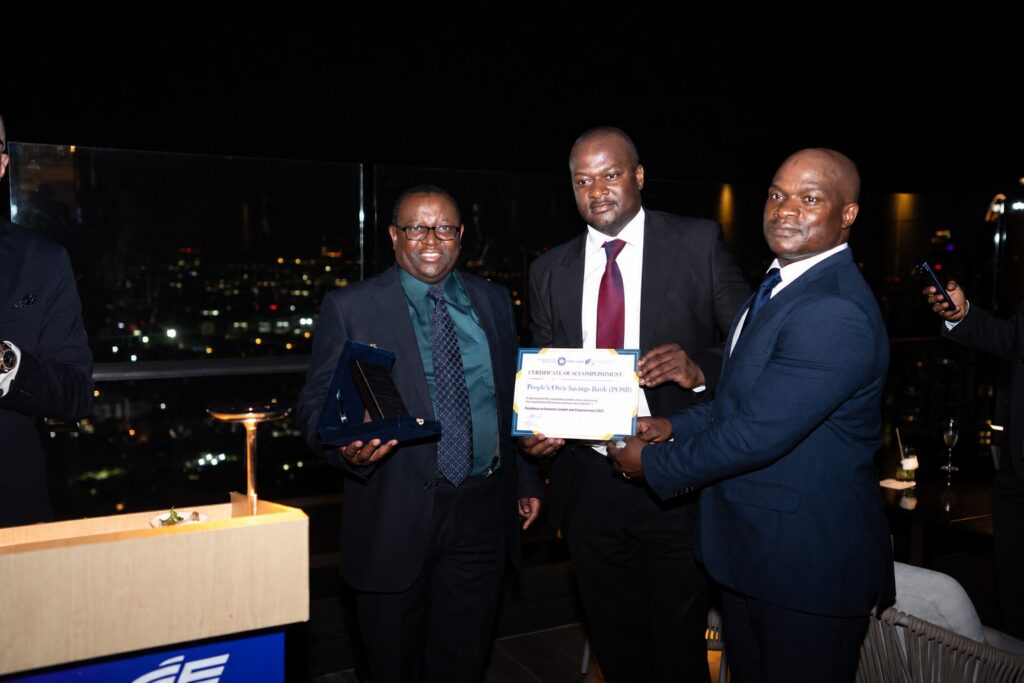
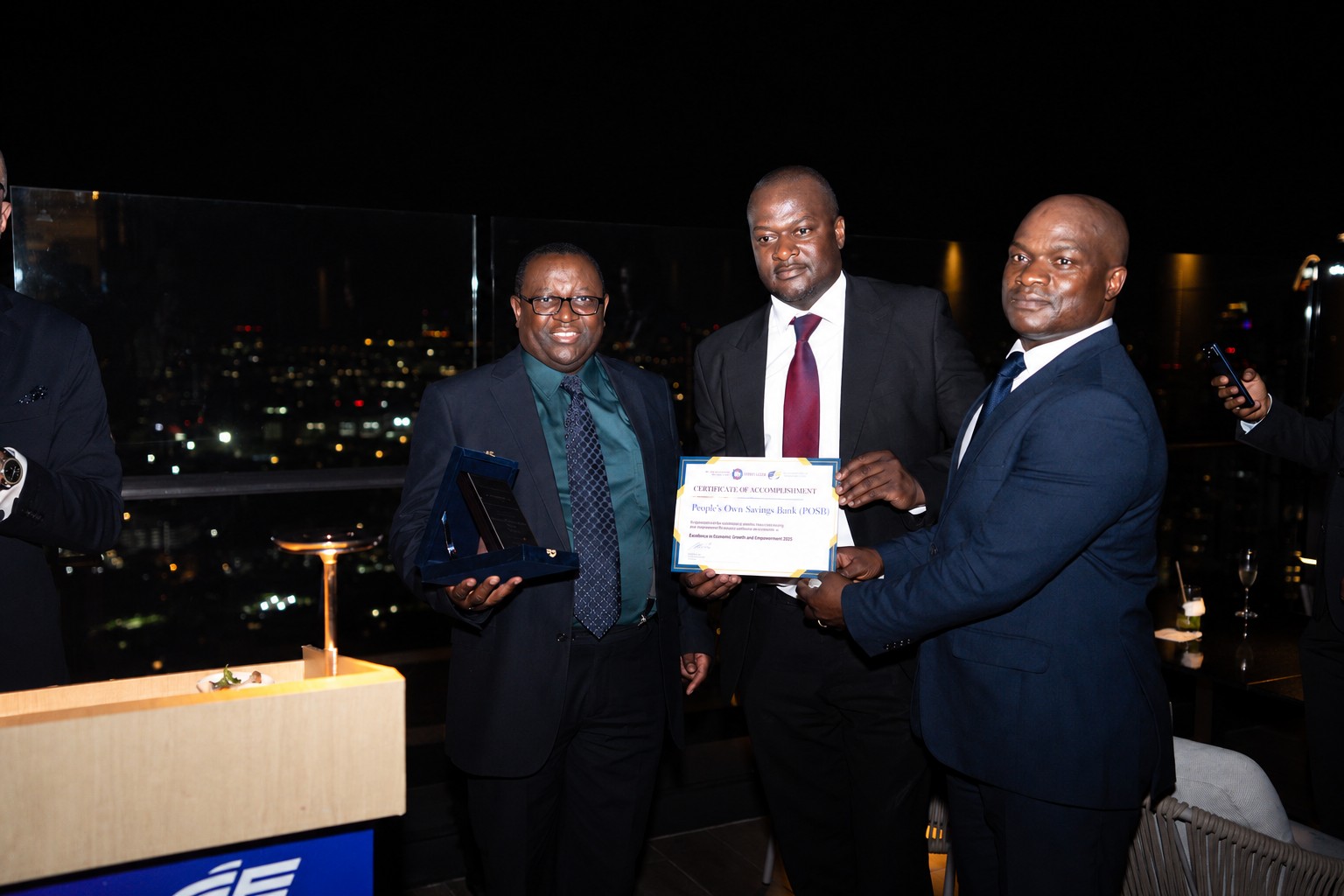
POSB Board Chairperson, Mr Kenias Mafukidze (left), Treasury Executive, Mr Allen Machipisa (centre), and Head of Internal Audit, Mr Izasi Mukonyerwa (right), pose with the Bank’s certificate and award in Bangkok, Thailand, recently.
For more information on WSBI-ESBG’s commitment to the SDGs and to explore the full SDG Report, please visit our webpage.
About POSB
The People’s Own Savings Bank (POSB) is Zimbabwe’s only 100 percent homegrown savings bank that has served the nation by providing quality, affordable and accessible banking services for over 120 years. Formerly the Post Office Savings Bank, POSB was established in December 1904 as a statutory fund to mobilise savings for national development. From January 1905 until 1965, the Bank conducted its operations through the Post Office infrastructure network. In 1965, the Post Office Savings Bank Act {Chapter 249} was promulgated, thereby providing for the administration of the Savings Bank by the Posts and Telecommunications Corporation (PTC) on an agency basis. Finally, in 2001, the People’s Own Savings Bank of Zimbabwe Act (Chapter 24:22) was promulgated. This Act effectively established POSB as a corporate body, separate from PTC. Learn more about POSB at www.posb.co.zw and follow us on Facebook, Twitter, Instagram, and LinkedIn (@POSBZimbabwe).
POSB Contact
David Makacha
Public Relations Manager
Email: [email protected] or [email protected]
Telephone: 0242 79381